Old Wooden Barn Quick Stitch Review for Business
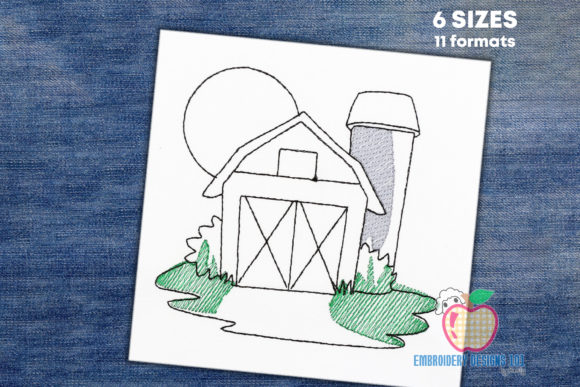
When I first opened the Old Wooden Barn Quick Stitch file, I immediately saw a design that speaks in warm, handcrafted tones. It’s not trying to be overly polished or corporate—it feels like something you’d find on a well-worn apron in a family bakery, or on a canvas tote carried through a weekend farmers’ market. For a small business building its visual identity, that kind of friendly, rustic personality is worth its weight in thread.
The description mentions the design is fun and easy to stitch, and that it’s not 100% filled. That open stitch character is a huge asset for commercial embroidery. A lighter fill means faster run times, reduced thread usage, and a softer hand on the fabric—all things that matter when you’re producing small business merch at scale. You get the look of a detailed illustration without the stiffness that can ruin wearability on a cap or a T-shirt.
First Impression and Visual Personality
The old wooden barn image carries an immediate sense of tradition and simplicity. It’s not a hyper-realistic rendering—thanks to that quick stitch structure, it reads more like a sketch or a linocut. For a brand, that’s a storyteller’s dream. I can already picture this on the sleeve of a work shirt for a craft brewery, or embroidered in earthy browns and greens on a coffee shop apron. It’s bold enough to be recognizable at arm’s length, yet unassuming enough to stay classy, not loud.
Given that it sits in the Cities category, there’s an interesting juxtaposition. A wooden barn might seem out of place among skyscraper motifs, but many urban businesses—rooftop gardens, modern farm-to-table restaurants, artisan florists—lean into rustic motifs to soften their brand. The design becomes a bridge between country roots and city storefronts, which can actually strengthen storytelling for the right client.
How the Open Stitch Style Benefits Real Business Use
The fact that this machine embroidery design isn’t 100% filled makes it a powerhouse for everyday merchandise. A dense fill on a large design can turn a soft tote bag into a stiff board. Here, the fabric remains flexible, breathable, and comfortable against the skin — crucial for uniforms worn all day. That open architecture also makes the design more forgiving on textured or napped fabrics like fleece or canvas, where heavy stitching can sink and lose definition.
From a production standpoint, quick stitch designs reduce needle penetrations, meaning less wear on machines and faster turnover on larger orders. If a boutique or Etsy seller wants to offer embroidered patch versions, this file is a candidate because the low stitch count makes patching lightweight and easy to iron or sew on. I’d absolutely test it at multiple sizes—more on that later—but the built-in range of sizes shown in the product image gives a solid starting foundation.
Where This Design Shines in Branded Merchandise
I always evaluate a digital embroidery file through the lens of real-world placement. Here’s where Old Wooden Barn Quick Stitch fits best:
- Apron embroidery: Centered on a bib apron or placed smaller on a waist apron pocket, the barn adds a signature mark without overwhelming the garment. Bakeries and florists will find it especially fitting.
- Cap embroidery: The lower stitch density helps the design sit flush on curved cap fronts without puckering. I’d recommend the smaller size options for structured caps.
- Tote bag design: On a canvas or cotton tote, the open fill lets the fabric texture show through, creating a beautiful “vintage print” look that customers love.
- Chest logo or sleeve accent: For work shirts or polo shirts, placing this on the left chest or as a sleeve detail delivers a professional yet approachable brand signal. It makes a uniform feel thoughtfully branded, not just standardized.
- Branded patch: Stitch it as a standalone patch with a merrow border, and it becomes a collectible item or a product label that can be sewn onto jackets, backpacks, and even greeting card packaging.
In each case, the design’s friendly, rustic charm reinforces a sense of care and authenticity—exactly what small businesses want to convey to their customers.
Proceed with Care: Situations That Need Testing
No design is a one-size-fits-all solution. Because we’re working with an open, sketch-style design, certain applications require a closer look:
- Very small patch sizes: If you scale down too far, the open lines might become fragile or lose legibility. I’d run a sample at the intended patch dimensions before committing to a production run.
- Cap fronts with steep curves: While the design is cap-friendly overall, extreme curvature can distort elements. Use a cap hoop and test placement carefully.
- Dark uniforms or black garments: The design relies on contrast. If you’re stitching with a dark thread on a dark fabric, the open lines might disappear. Choose thread colors wisely and consider a subtle outline to pop the shape.
- High-wear items needing frequent washing: Because the stitching isn’t fully filled, loose thread tails or small details could snag over time. A good stabilizer and secure tie-offs become non-negotiable.
- Fabric with heavy texture: Thick terry cloth or loosely woven linen can cause the open stitches to sink or look uneven. I’d test on a similar fabric swatch first and possibly add a topper.
The key takeaway: always verify stitch-out quality on your actual material, with the stabilizer you plan to use, at the exact size you’ll sell.
Strengthening Brand Identity and Customer Trust
A machine embroidery design does more than decorate—it becomes part of your brand identity. When a customer sees that little barn on a tote bag or a uniform, they start connecting the visuals with their experience. Consistency builds trust. Using Old Wooden Barn Quick Stitch across multiple touchpoints—aprons, staff shirts, product packaging accents, even as a finished product like a standalone patch—creates a cohesive, intentional look.
This kind of visual consistency tells buyers, “We pay attention to detail.” For a handmade shop or a small café, that’s priceless. The open, approachable style also signals approachability and warmth, which can increase buyer engagement. I’ve seen brands use similar rustic marks to elevate their perceived value without looking overproduced. Customers often perceive a hand-stitched, sketch-like design as more artisanal and premium.
Practical Embroidery Designer Notes
From my own workflow, here are the steps I’d take before presenting this design to a client or using it for a product line:
- Test in black on white first. I always run a monochrome sample to check line clarity, spacing, and any unexpected jumps or trims. It reveals the skeleton of the design before I introduce color variables.
- Verify the sizes. The description says multiple sizes are included. I’d stitch the smallest and the largest from the pack to know the safe range. If the smallest loses details, I’d set a minimum patch size for clients.
- Audit thread color contrast. For open designs, contrast is more critical than with solid fills. I’ll test at least two colorways—like a warm ochre on natural canvas and a charcoal on heather grey—to see how the barn’s lines hold up.
- Confirm hoop size compatibility. Make sure the design fits standard hoops you and your customers own. If you’re selling the finished goods or the embroidery file to other crafters, note the required hoop inches clearly.
- Choose the right stabilizer. A medium-weight cutaway stabilizer usually works well for open designs on knits; for woven tote bags, a tear-away may be enough. I’d test both to avoid puckering.
- Create a printable mockup. Before stitching a single garment, I generate a printable mockup sheet that shows the barn on different products. This helps clients visualize placement and makes approvals smoother.
- Compare beside other design assets. If the brand already uses a logo or other icons, I’ll lay out the barn next to them. Does it harmonize? Does it compete? The goal is a cohesive family of design assets, not a random pick.
- Check commercial licensing. The product listing should outline whether you can use the digital embroidery file on items for resale. Always verify that commercial embroidery rights are included or purchase an appropriate license before selling finished merchandise.
Final Thoughts from a Production Angle
Old Wooden Barn Quick Stitch is the kind of design I’d feel confident recommending to a wide range of small business owners—florists, bakers, pet brand creators, craft market vendors, and studio owners who want their merchandise to feel personal. Its open, quick-to-stitch nature saves time and thread, and the visual effect reads as intentionally vintage, never unfinished.
It’s not a design for every scenario; if your brand demands high-gloss, ultra-refined logos, you may find it too humble. But for a brand that celebrates handmade values, local connection, and down-to-earth quality, this barn image becomes a genuine asset. When stitched thoughtfully on the right fabric, with proper testing, it elevates a simple apron or tote into a story—and that story is what customers remember long after the purchase.
As with any machine embroidery design, the magic happens in the preparation. Take the time to sample, adjust thread colors, and confirm sizing. The finished product rewards that care with a clean, charming, and remarkably professional result that fits squarely into the world of small business merch and bespoke custom apparel.