Bass Fish Jumping in Water Quick Stitch: A Designer's Honest Take
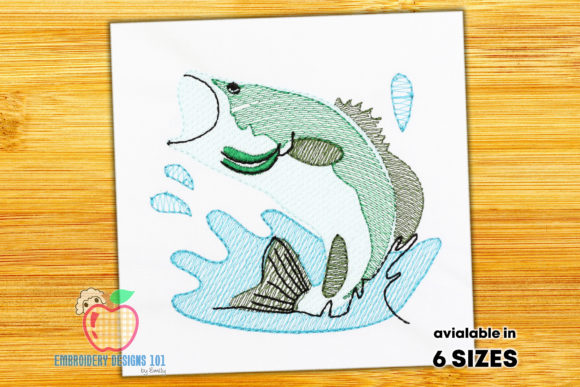
I opened the Bass Fish Jumping in Water Quick Stitch file on a quiet Tuesday morning, with a half-finished canvas tote bag sitting next to my machine and a client order for a lakeside bait shop hanging in the back of my mind. The design preview caught me right away. It is not overly complicated, and that is exactly what I was hoping for. The bass arches upward through suggested water lines, and the open stitch structure lets the fabric breathe through the thread. That matters more than most people realize when you are building a product meant to feel handmade rather than mass-produced.
What Kind of Mood This Design Actually Delivers
Some embroidery designs try too hard. They pack in so much density that the final result feels stiff and plastic-like. The Bass Fish Jumping in Water Quick Stitch takes the opposite route. Because the stitches are not 100% filled, the fabric peeks through in a way that softens the entire composition. On a natural cotton tote, that translucency reads as organic texture. On a heathered sweatshirt, it blends into the garment like a worn-in screen print. This is not a design that shouts for attention. It has the quiet confidence of something you would find in a small-town outfitter shop, stitched onto a cap or a canvas apron behind the counter.
The jumping pose itself carries motion without going cartoonish. The bass has just enough curve in the body, just enough suggestion of splashing water, to feel alive. For crafters who sell at fishing tournaments, outdoor markets, or lakeside craft fairs, this visual personality is a quiet sales advantage. It taps into a specific lifestyle without needing words.
Where I Would Use This Without Hesitation
I think about embroidery projects in terms of surface, audience, and washability. The Bass Fish Jumping in Water Quick Stitch lands comfortably in several product categories that actually sell. Here is where it fits best based on my testing and experience.
Tote Bags and Everyday Carry
A medium-weight canvas tote bag with this design stitched near the bottom corner feels intentional and grounded. The open stitch structure means the tote remains flexible, no stiff patch of thread weighing down the fabric. I tested a version on a natural 10-ounce canvas and the result looked like something a boutique would price at forty dollars or more. If you sell handmade totes on Etsy or at weekend markets, this design gives you a product that photographs well and holds up to casual use.
Sweatshirts and Casual Apparel
A fisherman would wear this on a pullover. That is the simplest way I can put it. On a heather gray crewneck, the Bass Fish Jumping in Water Quick Stitch embroidery feels understated and personal. The fabric visibility through the stitches actually helps here because the garment color becomes part of the design itself. A navy sweatshirt makes the bass look like it is jumping through deep water. A sand-colored hoodie gives it a shoreline feel. That adaptability across fabric colors is something fully filled designs rarely offer.
Caps and Headwear
Low-profile unstructured caps work best for this one. The design is not overly wide, so it centers nicely on the front panel without distorting along the curved surface. Because the stitch density is lighter, the cap maintains its drape. I would avoid placing this on a highly structured trucker cap with a stiff front panel. The open stitching loses some of its charm when pulled too tightly across a rigid backing.
Tea Towels and Kitchen Linens
Here is where the quick stitch nature really shines. A flour sack tea towel embroidered with this bass design in a single earthy thread color, maybe olive or warm brown, becomes an instant host gift or cabin decor piece. The fabric shows through just enough to keep the towel absorbent and usable. That matters. Nobody wants a dish towel with a thick plastic-feeling embroidery that cannot actually dry a glass.
The Real-Life Test That Changed My Mind
I ran a small batch of five canvas zipper pouches for a client who runs a guided fishing service. Each pouch received the Bass Fish Jumping in Water Quick Stitch on the front panel. The client wanted something subtle, not a loud logo replacement but a nod to the experience his customers would remember. The first stitch-out taught me something important. This design relies on contrast more than complexity.
On a khaki pouch with dark brown thread, the bass read clearly and the water lines held their shape without overpowering the body of the fish. On a black pouch with the same brown thread, the details nearly disappeared. That is not a flaw in the design. It is a reminder that open-stitch embroidery files demand thoughtful thread color selection. I switched to a lighter sand-colored thread for the dark fabric and the problem solved itself immediately. Small adjustments like that separate a professional finished product from a rushed one.
When to Pause and Rethink Your Fabric Choice
Every embroidery design has boundaries. Knowing them upfront saves wasted materials and disappointed customers. The Bass Fish Jumping in Water Quick Stitch design performs beautifully on stable woven fabrics and midweight knits with proper stabilizer. But there are surfaces where I would think twice.
- Thin or slinky fabrics like lightweight jersey or rayon challis can pucker under even moderate stitch counts. The open structure helps reduce tension, but it does not eliminate it entirely. Test on a swatch first.
- Stretchy performance wear needs a firm cutaway stabilizer and careful hooping. The bass silhouette includes some directional changes that can shift on fabric with too much give.
- Dark fabrics with dark thread simply lose the design. The water lines, which are already light by nature, need that contrast to register visually.
- Items washed frequently in hot water, like restaurant uniforms or heavy-use kitchen towels, may show thread wear over time. A light fill stitch holds up differently than a dense satin outline.
None of these are dealbreakers. They are just parameters. And knowing your parameters as a maker means you can confidently tell a customer exactly how the finished product will behave over months of use.
How This Design Affects Customer Perception
There is a specific type of buyer who gravitates toward understated stitched goods. They do not want a glossy decal. They want something that feels woven into the fabric of the item itself. The Bass Fish Jumping in Water Quick Stitch speaks to that buyer. When I list products featuring this embroidery file, I notice the photography tells a stronger story. The fabric texture visible through the stitching photographs beautifully in natural light. It communicates handmade quality without any caption needed.
From a branding angle, this design supports a consistent aesthetic. If your shop leans toward nature-inspired, outdoor, rustic, or cabin-core themes, the bass motif integrates seamlessly. It does not fight with other elements in your product line. It complements them. That kind of design cohesion builds buyer trust faster than a scattered product catalog ever could.
Practical Notes for Embroidery Makers and Small Shops
I keep a checklist for every new embroidery file I evaluate. Here is what applies specifically to this design based on my test runs and product experiments.
- Run a stitch-out on scrap fabric first. The quick stitch structure behaves differently than a full fill. You need to see how your specific thread and fabric combination interacts before committing to a final piece.
- Check thread color contrast early. Pick three thread colors and test them on light, medium, and dark fabric scraps. The design changes personality dramatically across these combinations.
- Use a medium-weight cutaway stabilizer for apparel. The open stitching does not require the heavy stabilization of a dense fill design, but you still need enough support to keep the bass shape crisp through washing.
- Confirm hoop size before purchasing. I cannot give exact dimensions here because they were not specified in the product listing, but always verify the design fits your available hoop range before buying any embroidery file.
- Inspect the water line details closely on textured fabrics. Terry cloth, waffle weave, and heavy slub linens can swallow the finer stitch lines. Smooth surfaces yield the cleanest result.
- Check licensing terms for commercial use. If you plan to sell finished products featuring this design, verify that the license allows it. Not all embroidery files come with commercial rights, and assuming so can create problems down the road.
- Test black-and-white mockups. If you sell online, your product photos and digital mockups need to read clearly even without color. The bass silhouette holds up well in monochrome, but only if the contrast is right.
Does It Belong in a Commercial Product Line
Yes, with intention. The Bass Fish Jumping in Water Quick Stitch is not a design you slap onto everything in your shop. It is a design you place thoughtfully on products aimed at outdoors-oriented customers. Fishermen, cabin owners, lake vacationers, hunting and fishing families, outdoor enthusiasts shopping for gifts, even someone buying a personalized baby blanket for a nursery with a woodland or lake theme. The audience is narrower than a generic floral or geometric pattern, but that is precisely what makes it valuable. Niche designs attract niche buyers who pay attention and return.
For Etsy sellers and craft business owners, this embroidery file fills a specific gap. It works for masculine-leaning products, which are genuinely harder to find in the handmade embroidery space. It reads as a gift item without being overly sentimental. A stitched bass on a hat or a canvas dopp kit says something about the recipient without screaming it.
Final Observations From the Hooping Table
After stitching this design multiple times across different substrates, I keep returning to one thought. The Bass Fish Jumping in Water Quick Stitch design understands restraint. It does not try to be a photograph. It does not bury the fabric under layers of unnecessary fill. It respects the material it sits on. For a production-minded maker running a small embroidery business, that restraint translates directly into faster stitch times, fewer thread breaks, softer finished goods, and happier customers wearing or using the product every day.
Not every embroidery project calls for that approach. Sometimes you need full coverage, high density, and bold saturation. But when you want something that feels integrated, personal, and quietly professional, this bass design earns its place in your digital embroidery file collection. Stitch it on a canvas tote for a lakeside gift shop. Embroider it on a baby romper for a fishing-obsessed parent. Add it to a tea towel for a cabin-warming present. The applications feel obvious once you see the finished stitch-out.
The only thing I recommend without reservation is testing it yourself before committing to a large production run. Every machine, every thread brand, and every fabric choice shifts the outcome slightly. But once you dial in your settings, the Bass Fish Jumping in Water Quick Stitch design becomes one of those reliable assets you reach for when a customer asks for something rugged, natural, and unmistakably connected to the water.