Santa Claus with Gift Redwork: A Designer’s Honest Review
First Impression: The Mood of a Hand-Stitched Holiday Classic
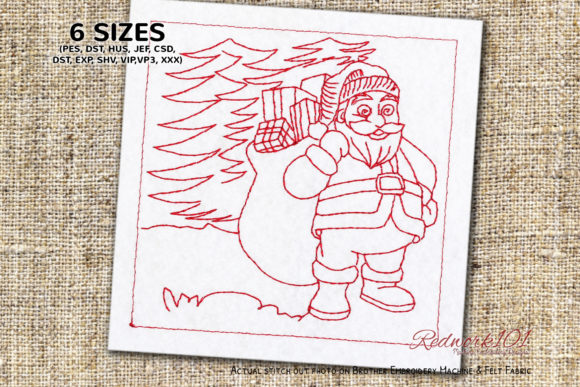
When I first opened the Santa Claus with Gift Redwork file, I immediately felt a wave of nostalgia mixed with clean, festive simplicity. This is not a loud, glittery holiday design. Instead, it leans into a cozy, almost heirloom redwork tradition that many of my customers associate with handmade memories. The intricate linework of Santa’s beard, the gentle curve of the gift sack, and the subtle holly sprigs create an emotional tone that is equal parts nostalgic and playful. It whispers Christmas morning rather than shouting it, and that quiet confidence is exactly what sells well on keepsake items.
The optional box stitch mentioned in the product description caught my attention immediately. Knowing I can present this as a framed redwork portrait on a pillow cover or as a borderless design on an apron gives me flexibility. For those of us building a seasonal product line, that one detail can mean the difference between a single-use design and a versatile staple. The outer box color varies across designs, so I knew I would test thread choices carefully before settling on my final look.
Seasonal Selling Potential: From Craft Fair Tables to Etsy Bestsellers
I always assess a machine embroidery design by how many different ways it can be stitched into a real income stream. Santa Claus with Gift Redwork passes that test with flying colors. Here is exactly where I would place this design if I were curating a holiday collection for a handmade shop, Etsy store, or even a limited craft fair inventory.
- Kitchen towel embroidery – A single Santa motif on a crisp white flour sack towel with a matching red hem screams farmhouse Christmas. Add a simple “Merry Christmas” script and you have a set that buyers snap up for hostess gifts.
- Pillow covers – On natural linen or a snowy white cotton-linen blend, the redwork pops beautifully. I would stitch two coordinating pillow covers with the box stitch included to create a framed look, perfect for sofa styling during the season.
- Sweatshirt embroidery – A small placement on the left chest or a larger back panel on a heather gray crewneck turns the design into wearable nostalgia. This is exactly the kind of limited-edition apparel that performs well on social media previews.
- Tote bag design – A canvas tote with Santa Claus with Gift Redwork centered on the front becomes an instant gift bag that doubles as a reusable shopping bag. I would sell this as a “gift-ready” product with a ribbon tied to the handle.
- Embroidered patch – Stitch it on felt or twill, trim neatly, and package as a sew-on or iron-on patch for jackets, backpacks, or denim. Patches are low-cost, high-margin items that customers often buy in multiples.
- Baby items and family matching sets – On a soft white bib, a tiny newborn beanie, or even a parent-child tee set, the redwork Santa feels tender and timeless, avoiding the overly cartoonish look that can put off some buyers.
- Aprons – A half apron with the design near the pocket area sells well as a “baking with Santa” themed kitchen gift.
Each of these finished products photographs beautifully, and that is critical. Printable mockups with this design used on different items would generate strong engagement on Instagram and Pinterest, drawing in buyers who value a handcrafted aesthetic over mass-produced graphics. When I create product listings, I would highlight the fact that the redwork technique appears hand-stitched, instantly boosting the perceived value and giftability of the item.
Where to Use with Care: Hoop Size, Fabric, and Finish
No embroidery designer wants to discover a gorgeous design cannot actually be stitched on the products they planned. With Santa Claus with Gift Redwork, I immediately considered the practical limitations that come with any detailed linework file.
- Small hoop sizes – Redwork designs with fine facial details can lose clarity when shrunk too far. I would avoid hoops smaller than 4x4 inches unless I first test-stitch the file and confirm that Santa’s eyes and beard lines remain crisp. Every embroidery file behaves differently, so checking stitch density at reduced sizes is a must.
- Thick towels and textured fabrics – While kitchen towels are a top-selling item, high-pile terry cloth can bury fine redwork stitches. A low-loft towel, a flour sack cotton, or even a waffle weave works better. I always test on scrap fabric first and use a water-soluble topper to keep delicate stitches from sinking.
- Dark fabric – Classic redwork shines on white or cream. On dark fabrics like navy or charcoal, red thread can look muddy unless you deliberately choose a brighter, slightly thicker thread. I would create one sample on a deep red fabric to see if the design still reads, but generally I stick to light backgrounds for this style.
- Stretchy garments – On sweatshirts or baby onesies, I would use a heavyweight cut-away stabilizer to prevent the redwork lines from distorting after wear and washing. The design’s charm relies on smooth, continuous lines, so any puckering would damage its hand-stitched illusion.
- Curved caps – I would skip structured caps entirely. The flat, framed nature of the design works best on flat surfaces. A beanie or a bucket hat could work, but a curved cap brim could distort the box stitch boundary.
- Items needing repeated washing – For dish towels, aprons, and baby items, I always advise pre-washing the fabric and heat-setting the thread if using specialty redwork thread. Customers expect red thread to stay red, not bleed onto the white background after a few cycles.
I also pay close attention to the optional box stitch. Some finished products look better without a visible border, especially when the design flows into the fabric naturally. Others, like patches or framed ornaments, benefit from that clean outer line. I would stitch several samples, photograph them side by side, and let my customers vote on their favorite version via social media. This kind of interaction builds customer trust and pre-sells the product before I even list it.
How This Design Elevates Holiday Products
In my experience, the emotional pull of a design like Santa Claus with Gift Redwork directly impacts buyer behavior during the busy fourth quarter. Holiday shoppers are overwhelmed by digital noise and mass-produced glitter. When they spot a product that feels quiet, personal, and rooted in tradition, they pause. That pause often turns into a sale, and that sale often becomes a repeat customer.
Here is why this design raises the value of almost any seasonal item I make:
- Seasonal appeal – Santa never goes out of style, but the redwork technique makes him feel fresh and artisanal. It avoids the dated clipart look that some holiday embroidery files suffer from.
- Buyer emotion – The design triggers memories of vintage Christmas cards and grandmothers’ embroidery hoops. That emotional warmth is exactly what makes someone choose a handmade gift over a store-bought alternative.
- Giftability – A finished product featuring this design needs almost no extra wrapping. Tied with a simple red ribbon, it becomes a present that looks thoughtful and intentional. That is a huge selling point for Etsy sellers who offer gift-ready items.
- Brand consistency – If I build a small shop around cozy, traditional holiday pieces, this design fits seamlessly alongside other redwork motifs like Christmas trees, reindeer, or winter botanicals. It helps me create a recognizable product line rather than a random assortment.
- Visual recognition – The bold red on white or cream is instantly readable at a glance, even in a small mobile thumbnail. That improves click-through rates on Etsy or Instagram shops.
Practical Embroidery Designer Notes
Before anyone adds Santa Claus with Gift Redwork to their commercial embroidery product rotation, I have a few professional notes that come from years of testing files from Creative Fabrica.
Thread Colors and Fabric Testing
Redwork lives and dies by thread choice. I always test at least three red thread shades on a light cream fabric and a pure white fabric. A true Christmas red, a deeper burgundy red, and a slightly muted cranberry red can each transform the mood from playful to sophisticated. The product description mentions the outer box color varies, so I would not assume a single thread color works for every version. If the box is stitched in a different red or even a metallic thread, the entire look changes. Test thoroughly and photograph each result to decide which combination sells best.
Stitch Density and Detail
Because this is a high-quality redwork embroidery as described, I would expect well-mapped stitch paths and consistent density. Before selling any finished item, I run the file on a stable cotton base with a medium-weight cut-away stabilizer. I look for any spots where the stitch length might be too short, causing thread breaks, or too long, causing loose loops. I also check small details like Santa’s facial features and the gift box bows. If a design ever stitches out with a clunky appearance in these small areas, I adjust my machine speed or slightly reduce thread tension rather than blame the digitizing. However, if the file itself has issues, I reach out to the designer through Creative Fabrica for clarification.
Hoop Size and File Confirmation
I always encourage fellow embroidery sellers to double-check the hoop size requirements in the product listing before purchasing. This design is versatile, but it likely comes in multiple sizes. If the listing only includes one size, I check whether my software can resize it without distorting the stitch count. The Creative Fabrica page should detail the formats included, but I never assume format availability. After purchase, I verify the file opens correctly in my embroidery software and that the stitch count matches my expectations for a design of this complexity.
Stabilizer and Finishing Tips
For light fabrics, a tear-away stabilizer often works fine for redwork test pieces. For any product that will be laundered frequently or worn, I switch to a no-show mesh cut-away stabilizer. I also press my finished embroidery from the back side using a fluffy towel underneath to prevent flattening the stitches. A light steam sets the thread and removes any hoop marks, giving the product a professional, ready-to-sell look.
Creating Mockups That Convert
Once the stitch test is complete, I take high-resolution photos on both natural linen and bright white backgrounds. I always include a close-up shot showing the stitch quality, a styled shot with complementary holiday props, and a flat lay that clearly displays the design’s size. These images become the backbone of my Etsy seller listings or social media previews. If I want to offer color variations, I use photo editing to show how a different red thread or a metallic box would look, noting that the actual stitched product may vary slightly.
Final Thoughts on Adding Santa Claus with Gift Redwork to Your Holiday Collection
As an experienced embroidery designer, I am selective about which files earn a permanent spot in my seasonal rotation. Santa Claus with Gift Redwork is one I would confidently place on a variety of products, from sentimental baby gifts to high-volume craft fair inventory. Its traditional redwork styling gives it a premium handmade feel that sets it apart from standard digital clipart embroidery.
Whether you are a small shop owner planning a limited holiday release or an apparel decorator looking for a versatile, high-appeal design, this file deserves serious consideration. It pairs beautifully with other Creative Fabrica embroidery designs, allowing you to build a full suite of coordinating Christmas items. Just remember to review the Creative Fabrica embroidery licensing before offering finished products for sale, confirm the hoop size and file formats match your machine, and most importantly, test stitch with the thread colors and stabilizers you intend to use. That small investment of time turns a purchase into a bestseller that customers reach for year after year.