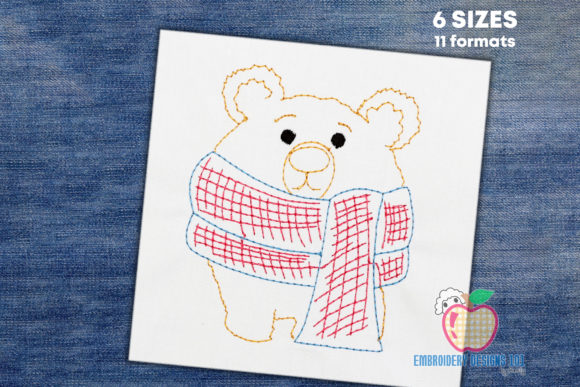
Cute Baby Bear with Scarf Sketch
As a designer who spends more time looking at stitch lines than actual fabric, I have developed a specific eye for what makes an embroidery design work in the real world. It is not just about how cute it looks on a screen; it is about how it behaves under the needle. When I first encountered the Cute Baby Bear with Scarf Sketch, my immediate reaction was one of practical optimism. In a market saturated with overly complex, dense fill-stitch designs that eat up thread and hoop space, this sketch-style approach feels like a breath of fresh air. It promises speed, clarity, and a charm that resonates with modern handmade aesthetics.
First Impressions: The Mood and Visual Personality
The Cute Baby Bear with Scarf Sketch immediately communicates a sense of warmth and approachability. Unlike rigid vector graphics or heavy satin stitches, the sketch aesthetic mimics the look of hand-drawn pencil or charcoal. This creates a softer, more organic feel that aligns perfectly with current trends in nursery decor and boutique children’s apparel. The visual personality here is playful but gentle. The bear is not roaring or standing aggressively; it is small, rounded, and inviting.
From a design perspective, the lack of 100% fill density is a significant advantage. By relying on outline and sparse internal details, the design allows the fabric texture to show through. This integration of material and motif elevates the finished product, making it feel less like a machine-made sticker and more like a crafted item. For an Etsy seller or a craft fair vendor, this distinction is crucial. Customers are increasingly drawn to items that feel personal and artisanal rather than mass-produced.
Real-World Application: Where Does This Design Shine?
I recently evaluated this file with a specific project in mind: a line of custom embroidered tote bags and baby onesies for a holiday gift collection. The versatility of the Cute Baby Bear with Scarf Sketch became apparent almost instantly. Because it comes in multiple sizes, as noted in the product description, it scales beautifully without losing its integrity.
For a tote bag design, placing a smaller version of the bear on the front pocket creates a subtle, sophisticated detail. It does not overwhelm the canvas. Conversely, scaling it up for a sweatshirt embroidery project works well because the sketch lines remain crisp even when enlarged. The scarf element adds a natural focal point that draws the eye to the chest area, which is ideal for branding or personalized gifts. Imagine this on a soft cotton blend hoodie for a winter market stall; the sketch style complements the cozy texture of the fabric rather than fighting against it.
In the realm of baby embroidery, such as muslin blankets or bibs, this design is particularly effective. Parents often seek items that are visually calming. The simple lines of the bear provide recognition without visual clutter. It serves as a perfect candidate for a personalized gift where you might add a name below the sketch. The open negative space around the bear gives you plenty of room for typography, ensuring the final piece looks balanced and professional.
Technical Performance and Stitch Clarity
When reviewing an embroidery file, I always think about the mechanics of the stitching process. The Cute Baby Bear with Scarf Sketch appears to utilize a combination of running stitch for the outlines and perhaps minimal satin stitch for key accents like the eyes or the scarf knot. This low-density approach means faster hooping times and lower thread consumption, which directly impacts your profit margins if you are selling finished goods.
However, the sketch style requires careful attention to thread colors. A black thread on black fabric will disappear, ruining the effect. To maintain the "sketch" illusion, high contrast is essential. I recommend using white or light grey thread on dark denim, or a warm beige thread on natural linen. The choice of stabilizer also plays a huge role here. Because the design is not heavily filled, it relies on the stability of the fabric to prevent puckering. Using a cut-away stabilizer for knit fabrics like sweatshirts or a tear-away for wovens like cotton tees will ensure the lines stay straight and clean.
One critical aspect to consider is the stitch density. While the design is light, the corners of the scarf and the roundness of the bear’s head need enough stitch density to hold their shape. If the density is too low, the edges may look ragged after washing. It is advisable to run a test sample on scrap fabric to inspect these small details. You want the sketch to look intentional and artistic, not unfinished or sloppy.
Where to Use This Design Carefully
While this design is versatile, there are situations where it might not perform as expected. Avoid using this machine embroidery design on highly textured fabrics like heavy chenille or loose-weave burlap, as the fine sketch lines may get lost in the material. Similarly, on stretchy fabrics without proper stabilization, the delicate lines could distort during stitching.
Be cautious with very small hoop sizes. If you attempt to digitize or use a tiny version of the bear for something like a custom apparel logo on a collar, the details may become indistinguishable. The sketch style relies on visible gaps between lines; shrink those gaps too much, and the design turns into a muddy blob. Additionally, if you are creating an embroidered patch that will be ironed onto a bag, ensure the back of the patch has enough stability to support the lightweight nature of the design.
Impact on Brand and Customer Trust
For creative entrepreneurs and Etsy sellers, the presentation of your product is half the battle. A design like the Cute Baby Bear with Scarf Sketch enhances brand consistency by signaling quality and thoughtfulness. When customers see a clean, well-executed sketch design, they perceive higher value than they would with a generic, clip-art style image.
This design is highly giftable, which boosts engagement. People buy embroidered items for birthdays, baby showers, and holidays. The bear theme is universally liked, transcending gender and age barriers. By offering this design on premium products—such as a kitchen towel for a housewarming gift or a pillow cover for a new nursery—you tap into emotional buying triggers. The finished product tells a story of care and craftsmanship, which builds long-term customer trust.
Practical Designer Notes for Implementation
Before committing to a full production run, I strongly advise testing the Cute Baby Bear with Scarf Sketch thoroughly. Here is a checklist for any designer preparing this for commercial use:
- Test on Scrap Fabric: Always stitch a sample on the exact fabric you plan to sell. Check how the thread interacts with the weave.
- Check Black and White Mockups: Convert your digital mockup to grayscale. Does the bear still stand out? This ensures adequate contrast before you spend hours stitching.
- Inspect Small Details: Zoom in on the scarf ends and facial features. Are there any overlapping stitches that might cause bunching?
- Confirm Licensing: Verify whether the digital embroidery file allows for commercial use of finished products. This is non-negotiable for small shop owners.
- Stabilizer Selection: Match your stabilizer to the fabric weight. Heavy fabrics need heavy stabilizers to prevent distortion.
- Thread Quality: Use high-quality polyester or rayon threads. Cheap threads can break easily in fine running stitches, leading to frustrating rework.
Ultimately, the Cute Baby Bear with Scarf Sketch is a smart addition to any craft business inventory. It balances aesthetic appeal with technical ease, allowing designers to produce high-quality, desirable products efficiently. Whether you are creating a single personalized gift for a friend or stocking shelves for a small shop product launch, this design offers the reliability and charm needed to succeed in today’s competitive handmade market. By paying attention to the nuances of fabric choice and stitch execution, you can transform this simple sketch into a standout piece that customers will love.